• Skip to primary navigation
  • Skip to main content
  • Skip to primary sidebar

Manten Resources

Supporting your Japanese language program

  • Manten Resources
  • About
  • Teachers
    • Stage 6 Beginners
    • Jblog Textbooks
      • Jblog 1
      • Jblog 2
      • Jblog 3
      • Programming
    • Base Camp
    • Student Workbooks
    • Amazing Races
    • Assessment
      • Manten Exams
      • Assessment Inspiration
      • Script Resources
    • Blog Spot
  • Parents
  • Contact

Assessment

The new differentiation

May 11, 2019 by Manten Resources

Are you struggling with elective class enrolments? Feel like you are constantly fighting for support from the executive? Your problem may lie in differentiation – although not from the traditional perspective.

Differentiation is how we shape our teaching and learning activities to support the needs and interests of the students. Traditionally we focus on making materials accessible to students who are at different levels of understanding and ability at a given point in time. For example, the NSW syllabus groups content appropriate to mainstream, prior-learning and background student levels. In the Jblog textbook series, we differentiate questions at the green, blue and black level based on ski runs.

But what if we looked at differentiation from a different perspective?

I was recently inspired by Seth Godin’s book “This is Marketing.” In it, he writes:

It doesn’t make sense to make a key and then run around and looking for a lock to open. The only productive solution is to find a lock and then fashion a key. Its easier to make products and services for the customers you seek to serve than it is to find customers for your products and services. (pages 5-6)

How many of us are trying to sell a language program rather than creating a languages product that meets the needs of our key stakeholders? Do you even know what the needs and desires of your stakeholders are?

When I refer to stakeholders, I am considering the students, their parents, the school executive and the larger community. These stakeholder groups will influence to different degrees how relevant my languages product will be perceived. Some of you may argue that we shouldn’t have to do this, and that simply stating the many benefits of language learning should be enough. Seth Godin argues though, that “The status quo doesn’t shift because you’ re right. It shifts because the culture changes”. (page 122)

It is a mighty task to change the dominant culture of your stakeholders to align with a languages’ viewpoint. But it is less difficult to align your course with the dominant culture. How about differentiating your languages course to meet the needs and interests of those stakeholders? Can you differentiate to better reflect their values, rather than swim against the tide? One of our schools has a dominant culture that exults commerce and business. So we embraced that with a unit titled “The Intercultural marketing business case study”. Students learned about how marketing to a Japanese audience differs to an Australian audience. They learned how customer expectations of customer service are deeply embedded in the language and culture that we identify with. Those of you in NSW currently reprogramming for the new syllabus may like to embrace this shift in mindset as you develop new task-based programs.

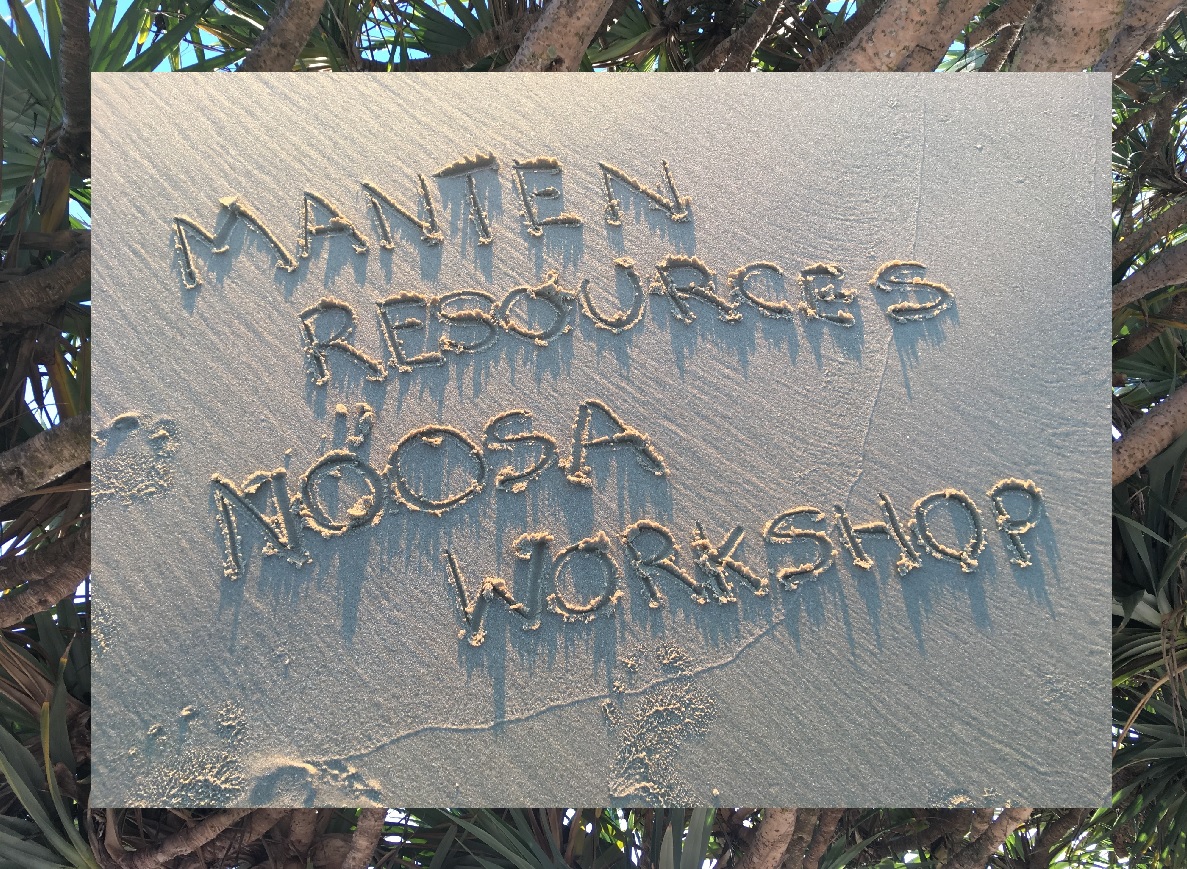
We will be discussing this topic in more detail at our Noosa workshop July 13th. The extended workshop will give us time to look at examples of assessment tasks that align with different stakeholder values and dominant cultures. You can book online using Trybooking or email me at jblog1help@gmail.com to request an invoice for your school. We look forward to escaping the winter chill with you then.

Good luck with your programming!
Filed Under: Advocacy, Assessment, Australian Curriculum, Differentiation, Student Engagement

Assessment – time to reconsider your beliefs

January 29, 2019 by Manten Resources

Last year I attended the National symposium of Japanese language education. At one point, I was chatting to my very clever friend Christine, and we were discussing assessment. I asked her if she felt she had learned anything at the conference and she agreed that she had. I then asked her, how did she know she had learned something as she had taken no form of assessment to indicate the degree of her improvement. She agreed then, that as adults we regularly learn new skills and information without having to succumb to any form of assessment. We can feel our progress internally, we can recognise the increase in our knowledge or skills. I ask you then, is this not also possible for students?

We sometimes use the term assessment almost synonymously for learning, as though one cannot occur without the other.  I can already hear people protesting the need for assessment to direct teaching and indicate to students, areas for development and of achievement. Yes, that is true, but I ask you, is that what is really happening as a result of your assessments? Or are you simply assessing to justify the grade you give them on a report? If the students do a task such as an exam, on work already covered in class, then from a students’ perspective you are just judging them against others – like they need any more of that in their lives! If they don’t have a chance to improve their performance or to use the feedback in a subsequent task in an obvious way (such as the Patch system), then chances are they will just ignore that feedback. You have spent hours writing a test, marking it, ranking students and all you have really done is wear yourself out and made the kids feel bad about themselves. (The top 10 probably feel fine I concede.) There really is more to life than exams.

This year I challenge you to think more carefully about the workload you are creating for your students and yourselves. As the saying goes “One of the very worst uses of time is to do something very well that need not be done at all.” (Brian Tracy, Eat that frog!)

We will be discussing more ideas for alternate ways to assess at our Noosa Workshop July 13th, 2019. Or, we have an online self-paced course on formative assessment if that interests you. As always, feel free to contact me if you have questions at jblog1help@gmail.com .

Good luck with 2019!

Filed Under: Assessment, Teacher Wellbeing

ENDING THE YEAR WELL

December 20, 2018 by Manten Resources

Many teachers have said goodbye to the students and now face the prospect of a day or two planning time. You don’t need me to tell you that this boils down to just a few hours by the time meetings are scheduled. Many of us are operating on reduced levels of “genkiness” post the end of year rush. So, what is the best use of your limited time?

1.       Organise your copying for the start of term

This may sound like a procrastination strategy, but you can guarantee that the school photocopier will breakdown week 1 term 1. If you are using the Hiragana Patch for example, print off your flashcards now and have the workbooks ready to go in a box. Print the levels tests and top up your filing cabinet or folder. 

2.       Prepare your welcome email to the class and parents

Many language teachers complain that they receive little parental support. Conversely, many parents complain that they don’t understand what their child is doing in the language classroom and they worry that they cannot help them at home. One way around this is to open the doors of communication week 1 with a blanket email introducing yourself to the parents of your students. Provide some background information about your own path to bilingualism and why you feel your course is so important. You can find some sample emails at: https://www.mantenresources.com.au/teachers/blog/developing-parental-allies/

We also have some free fliers you can share with the parents answering such questions as “Why should their child being learning a language?” and “How can I help my child learn a language?”.

https://www.mantenresources.com.au/parents/

3.       Target your weakest area

We all have one aspect of our profession that we like less than other aspects. What generally happens is that we avoid that aspect with “busy” tasks all year. Then we spend our precious summer holidays catching up or worrying about catching up on this work. Be honest with yourself and begin work on that task. You don’t have to finish it – you just need to start. Even an overview or draft document will be a welcome sight when you return to school next year. If there are resources out there that can help you, buy them! You can still edit the resource to make it your own, but it might save you hours in the holidays. Popular choices for this type of support currently include programming resources, systems for teaching script and assessment tasks. Or team up with another teacher and make a day of it. Stop for lunch at a Japanese restaurant and reward yourself for your hard work. If you’re working at home, try to make it a pleasant experience. Decorate your desk with a flower or candle or plan a nice morning tea break for yourself. I try to go for a swim with my family early in the morning. This wakes me up and stops me feeling so bad when I have to return to the desk later. It doesn’t matter what you choose but the key is to make your work more of a pleasurable experience.

Well done everyone on all you have achieved with your classes this year!

Filed Under: Assessment, Teacher Wellbeing, Teaching and Learning

YEAR 11 BEGINNERS ASSESSMENT

December 10, 2018 by Manten Resources

The change in 2018 to new assessment weightings and restrictions have left some teachers feeling confused about how to embed the changes. It helps to remember that the purpose behind the change was to help reduce the stress felt by our students due to over assessment.

The key changes to remember are:

  • Only 3 assessment tasks in Year 11
  • Only 1 formal exam eg Yearly exam
  • The minimum weighting for a task is 20% and the maximum is 40%

NESA has shared some sample assessment task overviews on their website. Most teachers are keen to include a Yearly exam at 40% which leaves us with the following weightings to play with:

  • Listening 20%
  • Reading 20%
  • Speaking 10%
  • Writing 10%


This essentially means you can do two assessment tasks that need to cover more than one skill. NESA also wants teachers to design tasks that can have all parts submitted together, rather than lots of portfolio tasks. Remember, the goal is to reduce the student work load. We are aiming to use these other two tasks to assess student learning in ways that don’t just mimic the HSC exam.

So, what can you do?

You are free to use the ideas below to develop your own task or you can purchase a pre-made version from our website. These will be available from the end of January but as some of you will be designing assessment task overviews this term, I thought I would give you the heads up now.

Task A : Japanese homestay preparation

Weighting: 20% Listening & 10% writing

Overview

Context & purpose: You are Alex, a year 11 student about to go to Japan later this year. You receive a videoclip from the homestay family you are going to be hosted by. You need to work out the gist of the videoclip and specific information in order to write a letter to them in Japanese.

Process, product & audience:

There are two parts to this task.

Part A: You will view a videoclip of a person discussing images of their family and daily routine. You will be required to write answers to questions in English about the clip. This section will take approximately 15 minutes. (Teachers will need to decide whether the students have access to viewing the video as individuals, enabling them to pause or repeat sections as needed; or to view as a class and are limited to a number of viewings.)

Part B: You will be required to complete a letter in written Japanese. The beginning and end of the letter will be provided for you. You will need to imagine that you are going to visit the family that appeared in the videoclip in Part A. Provide information about yourself and highlight any details that you have in common with the family in the videoclip. Are there similarities between your family, pets or daily routine and theirs? You should aim to write 100-150ji. This does not include the letter opening and close that is provided for you.

Task B : Japanese language camp

Weighting: 20% reading & 10% speaking

Overview

Context & purpose: You have signed up for a two-day language immersion camp in the school holidays for students studying Japanese. You are attending the orientation day and need to work out the gist and specific information in the orientation package, before being interviewed in Japanese about your selections by the camp support staff.

Process, product & audience:

There are two parts to this task.

Part A: You will receive a camp orientation pack. This pack will take you through the options available for different workshops and activities during the two days. You will be required to write answers to questions in English about the options and the reasoning behind your workshop choices. This section will take approximately 15 minutes.

Part B: You will be interviewed individually in Japanese by your teacher who will be acting as a camp support staff member. You will need to consider the decisions you made in Part A and be prepared to answer questions about these decisions and your personal background.


Pre-made task resource

The pre-made task versions will include PDF and word versions of documents so that you can edit the language, add furigana to kanji or delete sections that do not suit your students. You may like to lengthen or shorten the time on task or text lengths depending on the time of year that your tasks are conducted. The tasks are predominately open-ended so there are no embargo dates on the usage. Each task will include two versions of the texts, so you may like to mix and match content to personalise your own version of the task. Each task will cost $70. For further details, please feel free to email me at jblog1help@gmail.com .

We will look at creating some assessments for Continuers as well, but it has been a long time since Beginners have had some nice new resources, so they are first up this time.

Good luck with your assessment planning!


Filed Under: Assessment, Teaching and Learning

EARLY BIRD SALE – NOOSA WORKSHOP 2019

November 27, 2018 by Manten Resources

As we slide into the end of the year, many of us may be lacking the energy to feel inspired about 2019. Luckily, Junko Nichols and I have been working on some new ideas and activities to re-energise you next year at Noosa. The workshop is held July 13th which falls in the holidays for all the states, so we hope you can slot in a day with us. This year we are focusing on lots of take-away ideas and hands-on activities for primary and secondary teachers of Japanese.

We will be covering the following:

·       How to take a topical issue like “gender” and make the language accessible to students

·       How to use a newspaper article in English to develop speaking, reading and writing skills in Japanese

·       How to analyse stereotypes in the media using simple language and cover Learning Across the Curriculum content

·       Developing peer feedback skills in speaking tasks – your chance to sample our new Speaking stations resource

·       Effective ways to communicate with parents and increase school support at the primary level

·       Strategies to enable your students to contribute to the local community through language and charity work

·       Battling your nemesis subject at secondary schools – how to fight back and drive up those elective numbers

·       Incorporating soft-CLIL into primary art lessons

·       Simple print-making techniques inspired by Hokusai

·       Developing an appreciation of art and nature in students

·       Dabbling in Comprehensible Input theory – beginner strategies for circling questions and mini-grammar sub-lessons

·       Task-based learning – sample assessment task ideas

·       Embedding Aboriginal and Torres Strait Islander perspectives in your programs – actual resources and activities to get you started

It is going to be a HUGE day of learning, escaping the winter cold at the beautiful Pepper’s Resort, Noosa. The range of ideas is sure to raise your motivation levels during the mid-winter slump.

Early bird prices apply to the end of Term 1 only and places are strictly limited as this is designed as an intimate workshop.

To book your place, click here or email me at jblog1help@gmail.com  to discuss any aspects of the day. We hope to see you there!

Filed Under: Advocacy, Assessment, Australian Curriculum, Professional development, Teaching and Learning

Choose your weapons wisely

May 11, 2018 by Manten Resources

This week I had an interesting conversation with a dedicated Japanese teacher. She mentioned casually that she felt “guilty” about purchasing some of our resources. I found this comment to be a real insight into our practice. It is also not a sentiment shared by many other industries or even other subjects. For some reason, as language teachers we are made to feel that not only do we need to know our subject well, our students well and have a good range of pedagogical strategies to draw upon, but that we also need to create every resource from scratch. Can you imagine a plumber rushing off to design his own pipes or a doctor being expected to manufacture his own medicines? Nobody has such expectations for other industries so please shrug off this unnecessary yoke of teaching.

In this month’s newsletter I am writing in more detail about some of the technological applications available to us to support formative assessment. Here are a few ideas we all need to consider when making decisions about ICT in general.

1. Choose the teacher strategy and content first

It is so tempting to jump on a bandwagon and start using technology because other people are doing it. This may have short-term benefits by grabbing the attention of the students due to the novelty factor. You may also become more enthusiastic as a teacher as you are excited about the new direction. These are both legitimate short-term benefits, but you also need to consider the longer term. Eventually the newness will wear off for both you and the students, so you need to ensure that there are other benefits from this technological choice. Is it more efficient? Is it saving you time because you can easily reuse or modify it for future lessons? Does it provide you with insights into the students’ progress and/or perspective/experience of the lesson?

2. Be mindful

Sometimes you may find a great youtube clip that you just want to use to settle the class or as a transition activity, rather than as a main source of content. That is fine, as long as you are mindful of what you are doing. Question each resource and activity before and after each lesson. Are you doing that task because you did it last year or because you feel it will suit this year’s cohort as well? What information is allowing you to make that decision?

3. What is your learning intention?

The term “fit for purpose” is often used when considering types of assessment. It suggests that formative assessment is preferable for certain purposes, and summative for others. Similarly, your technology and use of it, needs to match the purpose of your lesson. If you are promoting a growth mindset, you may want to question why you have grades/marks on your google form, or why the students do not have the option of editing the form? How you use the tools is just as important as how you select them.

Three Resources that will save you time and don’t cost the earth

  1. Manten Exams. Choose from our content library to create your own exams. Listening tasks rendered to your personal selection without an embargo date! https://www.mantenresources.com.au/teachers/assessment/manten-exams/
  2. Hiragana Patch and the Katakana and Kanji equivalents. Script resources that emphasise growth mindset and a formative approach to script mastery. https://www.mantenresources.com.au/teachers/resources-teaching-scripts/
  3. Amazing Race sets. Collaborative tasks covering all skills and mapped to Australian Curriculum outcomes and cross-curriculum content such as literacy and Aboriginal and Torres Strait Islander perspectives. https://www.mantenresources.com.au/teachers/our-resources/amazing-races/

Yes, we know you are capable, of creating everything from scratch, because language teachers are creative and talented people. But is this the best use of your precious time? You do deserve a weekend too!

Filed Under: Assessment, Growth mindset, Teacher Wellbeing, Teaching and Learning

  • « Go to Previous Page
  • Page 1
  • Page 2
  • Page 3
  • Page 4
  • Page 5
  • Go to Next Page »

Primary Sidebar

Copyright © 2026 · Manten Resources - All Rights Reserved