• Skip to primary navigation
  • Skip to main content
  • Skip to primary sidebar

Manten Resources

Supporting your Japanese language program

  • Manten Resources
  • About
  • Teachers
    • Stage 6 Beginners
    • Jblog Textbooks
      • Jblog 1
      • Jblog 2
      • Jblog 3
      • Programming
    • Base Camp
    • Student Workbooks
    • Amazing Races
    • Assessment
      • Manten Exams
      • Assessment Inspiration
      • Script Resources
    • Blog Spot
  • Parents
  • Contact

Assessment

Feedback and work life balance

February 18, 2020 by Manten Resources

A month into the school term and already those fantasies of a work life balance have fallen by the wayside. I am currently seconded to write an online course as part of a larger project. It is a fabulous opportunity, but I have begun to realize that there is no limit to the amount of time and energy you could pour into the task. This realization has caused me to reflect on where my time is best utilised.

One of my favourite quotes is by Brian Tracy who states: “One of the very worst uses of time is to do something very well that need not be done at all.” I see regular evidence of this in the workplace – meetings about what will occur at the upcoming meeting for example. But equally of concern, is doing something that actually needs to be done, but to a poor standard that questions whether it was actually worth doing at all. An example of this is marking of student work and feedback.

Teachers spend hours of their lives marking assessment tasks and regular classwork. The sheer volume of this aspect of our roles, has sometimes led to an emphasis on completion and fast turn- around times. Telling a student what they did wrong without actually giving them useful suggestions on how to improve next time, is almost pointless for all but the very motivated and self-aware. One step that also tends to be missed is feedback explicitly pointing out what students have done well. Sometimes they are not consciously aware of which aspects of their work are good or why something is working. To this end, I have begun to change the way I present feedback to students.

Many of us now teach using a blended learning model. Face to face lessons are supported by online tasks and resources via platforms such as Google classroom, Collaborate or Canvas. These provide us with an opportunity to improve the quality of our feedback in more time efficient ways. Let us consider two of these opportunities now.

1.Recorded verbal feedback

My son received this for a task from his year 6 teacher and I was so impressed. It allowed the parents to hear the feedback and my son to listen to it multiple times. He could pause it, and follow-up with the teacher if he wasn’t sure on an aspect of it, later in person. He could use it as a resource for later tasks. Most importantly, he could hear the tone of his teacher’s voice and was better able to interpret her message than when it is presented as a written comment. To create a comment, you simply press record. Amazing!
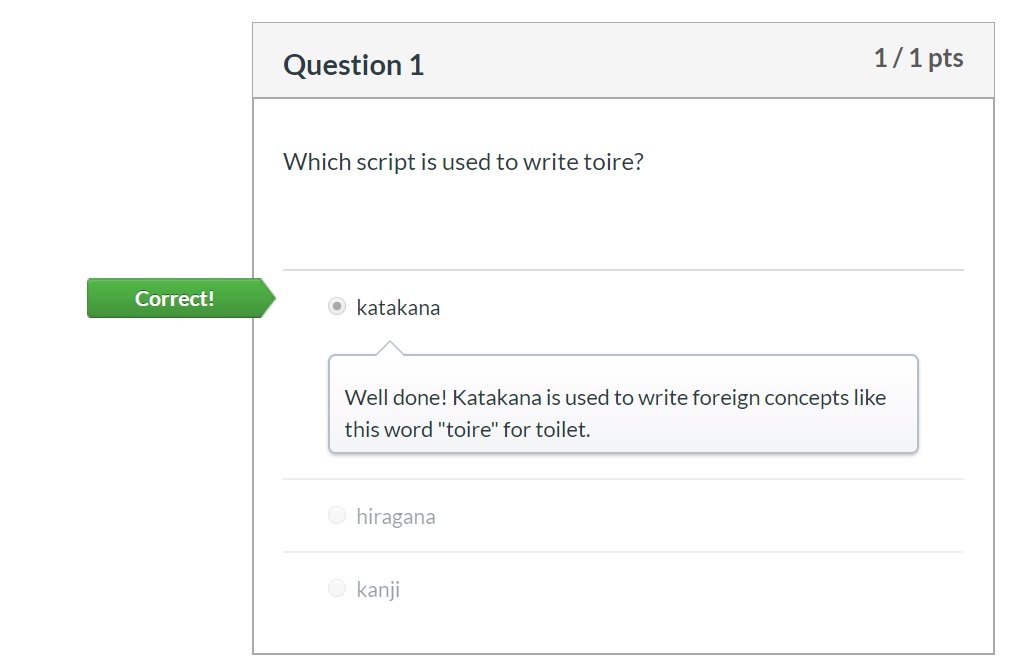
2.Online quiz feedback

Self-marking online quizzes are a fantastic tool in the contemporary teacher’s armoury. Students can work through the questions at their own pace and the marking is virtually instantaneous. The best platforms allow you to give a comment as well as indicate the correct answer. This is particularly needed for multiple choice questions where the student may have guessed the correct answer. As such, I include a comment even if the student is correct, to ensure they understand why this is the correct choice. Sometimes I will include a brief mnemonic to help them remember it next time.
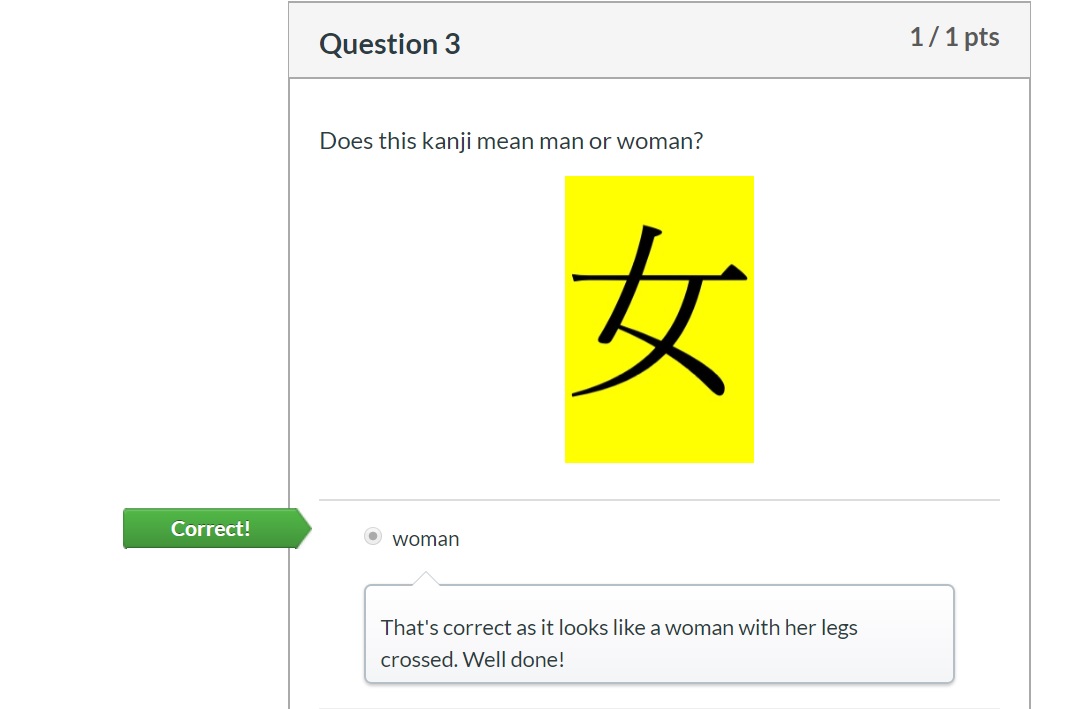
I have found both of these techniques to be worth the time commitment. I value feedback and recognise the positive impact it can have on my students. I also need to sleep. Aim to analyse the impact of your efforts and make conscious decisions about how you invest your time – for your own sake and your students!

Filed Under: Assessment, Teacher Wellbeing, Teaching and Learning

Christmas Countdown!

November 4, 2019 by Manten Resources

Term 4 is well under way and many of us are beginning to plan for next year – or fantasize about the Christmas holidays at least! As you begin to finalise your budgets and plan for the new year don’t forget to buy yourself a little something for Christmas. And what is the one thing all teachers need more of? Time.

Here is a list of 7 great time-saving resources under $70.

  1. Base Camp. This is definitely my new favourite resource and I have been thrilled to see small changes in my students as they learn the secrets of better study habits. $50 for the set.

https://www.mantenresources.com.au/teachers/our-resources/base-camp/

  1. The Platform. This is another new resource that builds on the work with Base Camp to develop student writing skills via a temptation bundle. This can be used as a formative assessment tool or ongoing classwork task. $50

https://www.mantenresources.com.au/teachers/assessment/assessment-inspiration/year-9-10-formative-task-the-platform/

  1. The Year 9/10 Values task. This task provides students with an opportunity to identify their own values, and to explore the profiles and life experience timelines of famous Aboriginal and Torres Strait Islander role models. This can be used as a formal assessment task or as a group task for NAIDOC week celebrations. Many of us want to embed Aboriginal perspectives in a more authentic manner but run out of time or ideas. This one is done for you. $70

https://www.mantenresources.com.au/teachers/assessment/assessment-inspiration/year-9-10-formative-task-the-platform/

  1. The Patch system. These are available for hiragana, katakana, Kanji basic and Kanji extension 1. This system allows students to have more autonomy in their script learning and provides much needed progress indicators as students work through the graded levels. This system is also supported by Education Perfect lists.$50 each

https://www.mantenresources.com.au/teachers/resources-teaching-scripts/

  1. Sample teacher marking guidelines. The biggest time-saving resource we have is the student workbook resources that have detailed tasks, listening drills and google forms with answers. If your budget doesn’t stretch that far though then the sample marking guidelines are a steal. They provide you with the tasks and sample answers giving you loads of inspiration even if you aren’t using our textbook as your main resource. Lessons for when you are away are suddenly done! $50

https://www.mantenresources.com.au/teachers/our-resources/student-workbooks/

  1. Speaking stations. The speaking stations game aims to maximise the time on task by placing the students in the driving seat. At all times both members are active either asking or answering the listed questions. The dice adds an element of luck so even the most talented student could be undone by unlucky dice throws. $50 https://www.mantenresources.com.au/teachers/blog/speaking-stations/
  2. Year 7/8 Japanese investment Expo. Students work through the reflection tasks that have them analyse details from a Japanese text, use hiragana and katakana tables to categorise export products and produce a bilingual video promoting their chosen agricultural industry using simple language and the scaffold provided. An optional extra would be to hold the “Expo” during a visit by Japanese students. $70

https://www.mantenresources.com.au/teachers/blog/making-language-relevant-in-regional-areas/


Good luck everyone with your 2020 preparations.

Filed Under: Aboriginal and Torres Strait Islander perspectives, Assessment, Student Engagement, Teacher Wellbeing, Teaching and Learning

Temptation bundling

October 18, 2019 by Manten Resources

Sometimes in life our actions have unexpected and even undesirable repercussions. I have a 12 year old son. He is an only child and has grown up in a somewhat nerdy household where we read a lot, believe learning another a language is normal and avoid a lot of mainstream media. His generation though are largely connected by the internet. When he started at a new school, we met some of his friends via video conference before we met in them or their parents in “real life”. We had encouraged him to be calm and quiet at home, but combined with his generation’s propensity for screen time, this had unexpected repercussions. We purchased him an exercise tracking device and realised that on a school day he would be lucky to reach 5000 steps – half the daily recommendation. We realised though that he had been merely doing what he was told. His teachers wanted him to sit still and listen – so he did. We drove him to school each day as it there are no buses from our suburb. When he came home, he wanted to read or go online. When was he supposed to be clocking up the 10 000 steps in this kind of lifestyle that we had created for him?

Around this time, I became aware of a concept called “temptation bundling”. This concept is a motivational strategy whereby you bundle an action you want to do with an action you need to do. For example, I had committed to a weekly task that I really wasn’t enjoying. I was beginning to dislike Thursdays because of this weekly commitment, even though the task was only a small part of the day. By contrast, something that I do enjoy is writing in the morning at a café that overlooks a marina. It is my special time to have a latte and look out at the boats as I play around with new ideas for resources or workshops. So, I combined the two in a temptation bundle. I allowed myself to only visit the café on Thursday mornings before I had to attend to the weekly commitment. In this way, I began to associate the commitment with my reward of writing time. The action I needed to do was the Thursday commitment, and the action I wanted to do was the café writing session.

We solved the problem of my son’s inactivity in the same way. The action he needed to do was move more for his long-term health. (I would like to emphasize that we were not concerned about diet or losing weight here, but rather the research into poor health associated with prolonged sitting for adults and children alike.) The action my son needed to do was exercise more, preferably outside in nature, to counteract his largely indoor school lifestyle. The action he wanted to do was purchase a mobile phone. We had told him he could have one when he started high school the following year. We also wanted him to appreciate the cost of such a device and to be responsible with such an expensive accessory. So, we developed a temptation bundle where he earned $5 for each day he walked 10 000 steps. We paid him in cash each week and then he banked it in a mobile phone account. We began by going for a walk after school to make up the shortfall. Soon though he came up with strategies like earning 2000 on the playground before school, and 2000 at recess and lunch. We had a bonus scheme where he earned an additional $5 if he made 15 000 or if he beat my score for the day. As his earnings grew, he came up with other ideas like joining me some days before school on my 6am walk. Exercise became a natural part of his identity as it fitted with his already present identity of someone who loves technology. His exercise was linked to his desire for technology. It has taken him months to earn the money and the habits of daily movement are now ingrained in his life.

So how does this relate to your teaching?

My latest project is called The Platform. This is a formative assessment tool pitched at Year 9 and 10 students. What do most students of this age want to do? In my experience, the answer is while away hours watching Youtube clips and drifting through social media posts. How can we make better use of this natural inclination to achieve learning gains in language study?

The Platform aims to create a temptation bundle where students become a member of a small group (2-4 students) to share videos that have interested them. They must write a minimum of 30 characters about each video and other members of the group have to respond to at least one post per learning cycle. I have created scaffolds to help them with this. Unlike regular tasks though, the students are rewarded for the quantity of writing they do, rather than the quality. We want them to experiment with language here, to focus on communicating with others for a real purpose and to practice vocabulary, grammar and script recognition on a regular basis. The teacher can then set group achievement goals such as a reward when all members of the group have written 100 ji each. Each post or comment is numbered and fortnightly reward draws could be held eg comment 21 wins a Japanese lolly or gets to sit in the tatami space or choose who to sit next to for that week. The more posts and comments you make the more chances you have of both improving your overall grade and winning the reward draw. There are two versions of this task included in the resource pack called Version 1 and Version 2.

This formative assessment tool could be used for writing in lieu of a formal task or it could be used as a tool to improve the learning culture and growth mindset of your cohort. You can read more about this task on our website at https://www.mantenresources.com.au/teachers/assessment/assessment-inspiration/ or email me at jblog1help@gmail.com .)

Good luck with your temptation bundling!

Filed Under: Assessment, Growth mindset, Student Engagement, Teaching and Learning

Exploring Values

August 2, 2019 by Manten Resources

The impact of social media on our students’ view of themselves is a concern for us as educators. We want them to leave school with a strong sense of self and good values that will guide them through life. This can seem like an impossible goal at times though when we watch them obsess over the perfect selfie shot rather than enjoy the actual moment.

One day I was visiting my mother in hospital and I had stopped at the hospital café. Two young women in their early 20s were discussing how they “needed” to get botox again in their lips. They were young, beautiful and healthy women sitting in a building where all around them people were fighting for their lives. Such preoccupation with looks and a curated image on-line is a struggle that my generation did not have to go through. I wished I could interrupt and urge the girls to concern themselves less with their presentation, and more on their personal achievements in life. What did they hope to do with their lives? What did they hope to see, experience, achieve, give back?

Values are a key to such personal understanding, yet we spend little time at school or as adults considering what these mean for each of us. Sometimes it is only when we hear of the challenges and achievements of others over adversity that we glimpse what this could mean for us individually. Role models can enable others to believe in their own potential. Public awards such as the Australian of the Year acknowledge these positive role models and redress the imbalance presented by the media and social media platforms

Fact:  In 2014, there were 14 Aboriginal finalists for the Australian of the Year Awards. By 2015, one in 7 Australian of the Year recipients were Aboriginal.
Source: Famous Aboriginal people, activists & role models – Creative Spirits, retrieved from https://www.creativespirits.info/aboriginalculture/people/famous-aboriginal-people-role-models#toc1

This website has some fabulous information about Aboriginal and Torres Strait Islander perspectives. It reminds us that the media does not always present a balanced view of the world and that stereotypes are developed through such biased representation. This inspired me to wonder, how can I improve value awareness and knowledge of positive Aboriginal and Torres Strait Islander role models whilst meeting the demands of the Japanese language syllabus?

The Stage 5 Values assessment task

This pitch for this task-based learning sequence and assessment is:
You are part of a marketing team that handles campaigns for multinational corporations. Your new client is a Japanese company looking to expand its business. Your job is to recruit possible ambassadors for the company that are in synch with their core values of ゆうき、がまん、きょうりょく、and どりょく.
Your brief is to find positive role models that represent at least two of the core values. You need to present background information on 4 possible candidates. At least two candidates must be Japanese.

The task takes students through identifying their own values, exploring the profiles and life experience timelines of famous Aboriginal and Torres Strait Islander role models. They will develop vocabulary resources related to these profiles, use the resources to read Japanese texts about these people and analyse how these people match the identified values of international companies such as Honda. Students will then focus on the identified Japanese values of ゆうき、がまん、きょうりょく、and どりょく to create a mixed media presentation endorsing 4 possible candidates. This task focuses on reading, writing and speaking skills and includes formative and summative assessment opportunities throughout.

If you are interested in such a task, it is available from Manten Resources for $70. Simply email jblog1help@gmail.com to order.

Good luck with your values journey!

Filed Under: Aboriginal and Torres Strait Islander perspectives, Assessment, Teaching and Learning

teacher requested resources

June 10, 2019 by Manten Resources

The teacher of a subject is often the very best person to know what their students need. This includes knowing what resources will be most effective for the cohort. Knowing what your students or your self could benefit from and having the time to create those resources though are two different things. That is where I hope to help. Recently I have had several teachers contact me about resources they were looking for. As a result we now have 3 new resources that may interest you.

1.New combined student workbook package

If you have purchase our student workbook resources pack (which includes 8 PDF work booklets for each chapter, teacher marking guidelines, sound files and google form tasks) you can now add on the combined workbook package for $50 for all three (ie Jblog 1, 2 and 3) or $25 each for one booklet (eg just Jblog 1.)

Why is this so handy?

This add-on package provides you with one PDF per textbook so that you can print off one booklet for the year if you wish.
It also provides you with the word document version though so that you can completely customise the booklet for you class! You can add in your favourite worksheets and activities; delete the provided ones that you never use and personalise each class booklet with photographs of your town, class etc.
This offer is only available to teachers who have purchased the student workbook resources pack.

2.New flashcards display cards
One teacher was looking for flashcards to display in their room. This set of 145 cards are all the Kanji listed in the Kanji index of Jblog 1, 2 and 3. You receive the set as PDF, word and individual jpegs so that you can also use them in presentations and activities. This set is $50.

3.New assessment task for Stage 4
This task is called the “Japanese investment Expo” and was inspired by a discussion with one of our regional teachers. The idea is that students use their knowledge of their region and agriculture to lure Japanese investment into a product of their choice. The hook is a narrative about a new mayor. Below is a brief extract.

The brief
A new mayor has been elected to your town. They are keen to increase the profile of your town on the international stage. The mayor has two key projects in mind.
The first is to establish a new sister city relationship with a town in Japan.
The second is to attract Japanese investment into local agricultural businesses to expand production and increase employment.
Your team will need to work through the attached tasks to help the mayor achieve these targets.

You can read more about this task on our blog. This task is $70 and can be modified to reuse each year.

Thank you to all the wonderful teachers who contact me and share with me their teaching situation. It is always a pleasure to hear from you and I look forward to seeing several of you at our Noosa Workshop July 13th!

Until then remember you can email me directly on jblog1help@gmail.com to order, make a request or just have a chat!


Filed Under: Assessment, Teaching and Learning

Making language relevant in regional areas

June 4, 2019 by Manten Resources

The challenge of building a profile for language courses in what Tony Liddicoat has described as the “monolingual mindset of Australia” is well known. If those of us struggle to do so in metropolitan areas when we have access to resources such as restaurants staffed by native speakers, foreign language bookshops and libraries, spare a thought for our regional colleagues.

I recently wrote on the topic of “the new differentiation”, inspired by Seth Godin’s book “This is Marketing.” In it, he writes:

It doesn’t make sense to make a key and then run around and looking for a lock to open. The only productive solution is to find a lock and then fashion a key. It is easier to make products and services for the customers you seek to serve than it is to find customers for your products and services. (pages 5-6)

I linked this idea to our efforts to establish language programs. How many of us are trying to sell a language program rather than creating a languages product that meets the needs of your key stakeholders? Do you even know what the needs and desires are of your stakeholders are?

I discussed this topic recently with a regional teacher and asked her what the most popular elective class is at her school. She replied that agriculture was and that her Japanese class was constantly running against it on the elective line. It would be a momentous task to change the culture of the school and the community which obviously values agriculture and the role in plays in local industry. Equally, the timetable/ curriculum coordinator is not going to listen to your pleas to have your subject moved away from the popular one. So, what can one do in such a situation?

This dilemma inspired me to create a Stage 4 assessment task called the “Japanese investment Expo”. The idea is that students use their knowledge of their region and agriculture to lure Japanese investment into a product of their choice. Here is a brief extract from the task:

Task overview

Australia is well known internationally for its agricultural success. We are a popular country for trade and investment due to our political and economic stability, our natural resources, safe and ethical practices and high level of research and development.

This assessment requires you to use your knowledge of agriculture in your region with your developing Japanese language skills. This is a group task that will develop your skills in collaboration, project management and creativity.

The brief

A new mayor has been elected to your town. They are keen to increase the profile of your town on the international stage. The mayor has two key projects in mind.

The first is to establish a new sister city relationship with a town in Japan.

The second is to attract Japanese investment into local agricultural businesses to expand production and increase employment.

Your team will need to work through the attached tasks to help the mayor achieve these targets.

Students work through the reflection tasks that have them analyse details from a Japanese text, use hiragana and katakana tables to categorise export products and produce a bilingual video promoting their chosen agricultural industry using simple language and the scaffold provided. An optional extra would be to hold the “Expo” during a visit by Japanese students. The local students could share their videos at small stands and attempt to lure the students to invest in their product using the (fake) investment yen distributed by the teacher to each visitor.

I live in a metropolitan area now, but I grew up on the South coast of NSW and studied agriculture myself for the HSC. We had an “ag plot” that we all loved and we experimented with raising chickens, driving tractors and the power of the electric fence (not recommended!). A few weeks ago, I was visiting Austrade and was impressed by the documents they produce on “investment opportunities in Australian agribusiness and food”. I had no idea Japanese companies like Hakubaku have built a noodle processing plant here or that Kagome have a tomato processing plant in Victoria. There are legitimate opportunities for Australian agribusiness to work with Japan so let’s start preparing our regional students to make the most of these in the future.

Let us now return to the original dilemma of what to do when up against the popular agriculture subject on an elective line. My advice would be to run an assessment task such as this one in Stage 4 and demonstrate to the timetable/ curriculum coordinator that these subjects work well together so should be on a different line. I would reinforce this with different agriculture linked assessment in Stage 5 and joint visits to the agriculture farm with visiting sister school students. Piggy-back onto the popularity of agriculture rather than fight it, and you may find they become your greatest allies. Don’t forget to share your Japanese cooking with the agriculture teachers either – and maybe use that opportunity to discuss how you are creating cross-curriculum tasks in your subject.

Good luck regional teachers!

The Japanese investment Expo assessment task is available for purchase for $70. It can be modified and reused each year to suit your cohort. Email jblog1help@gmail.com to order.

Filed Under: Advocacy, Assessment, Student Engagement, Teaching and Learning

  • « Go to Previous Page
  • Page 1
  • Page 2
  • Page 3
  • Page 4
  • Page 5
  • Go to Next Page »

Primary Sidebar

Copyright © 2026 · Manten Resources - All Rights Reserved