• Skip to primary navigation
  • Skip to main content
  • Skip to primary sidebar

Manten Resources

Supporting your Japanese language program

  • Manten Resources
  • About
  • Teachers
    • Stage 6 Beginners
    • Jblog Textbooks
      • Jblog 1
      • Jblog 2
      • Jblog 3
      • Programming
    • Base Camp
    • Student Workbooks
    • Amazing Races
    • Assessment
      • Manten Exams
      • Assessment Inspiration
      • Script Resources
    • Blog Spot
  • Parents
  • Contact

Teacher Wellbeing

Feedback and work life balance

February 18, 2020 by Manten Resources

A month into the school term and already those fantasies of a work life balance have fallen by the wayside. I am currently seconded to write an online course as part of a larger project. It is a fabulous opportunity, but I have begun to realize that there is no limit to the amount of time and energy you could pour into the task. This realization has caused me to reflect on where my time is best utilised.

One of my favourite quotes is by Brian Tracy who states: “One of the very worst uses of time is to do something very well that need not be done at all.” I see regular evidence of this in the workplace – meetings about what will occur at the upcoming meeting for example. But equally of concern, is doing something that actually needs to be done, but to a poor standard that questions whether it was actually worth doing at all. An example of this is marking of student work and feedback.

Teachers spend hours of their lives marking assessment tasks and regular classwork. The sheer volume of this aspect of our roles, has sometimes led to an emphasis on completion and fast turn- around times. Telling a student what they did wrong without actually giving them useful suggestions on how to improve next time, is almost pointless for all but the very motivated and self-aware. One step that also tends to be missed is feedback explicitly pointing out what students have done well. Sometimes they are not consciously aware of which aspects of their work are good or why something is working. To this end, I have begun to change the way I present feedback to students.

Many of us now teach using a blended learning model. Face to face lessons are supported by online tasks and resources via platforms such as Google classroom, Collaborate or Canvas. These provide us with an opportunity to improve the quality of our feedback in more time efficient ways. Let us consider two of these opportunities now.

1.Recorded verbal feedback

My son received this for a task from his year 6 teacher and I was so impressed. It allowed the parents to hear the feedback and my son to listen to it multiple times. He could pause it, and follow-up with the teacher if he wasn’t sure on an aspect of it, later in person. He could use it as a resource for later tasks. Most importantly, he could hear the tone of his teacher’s voice and was better able to interpret her message than when it is presented as a written comment. To create a comment, you simply press record. Amazing!
2.Online quiz feedback

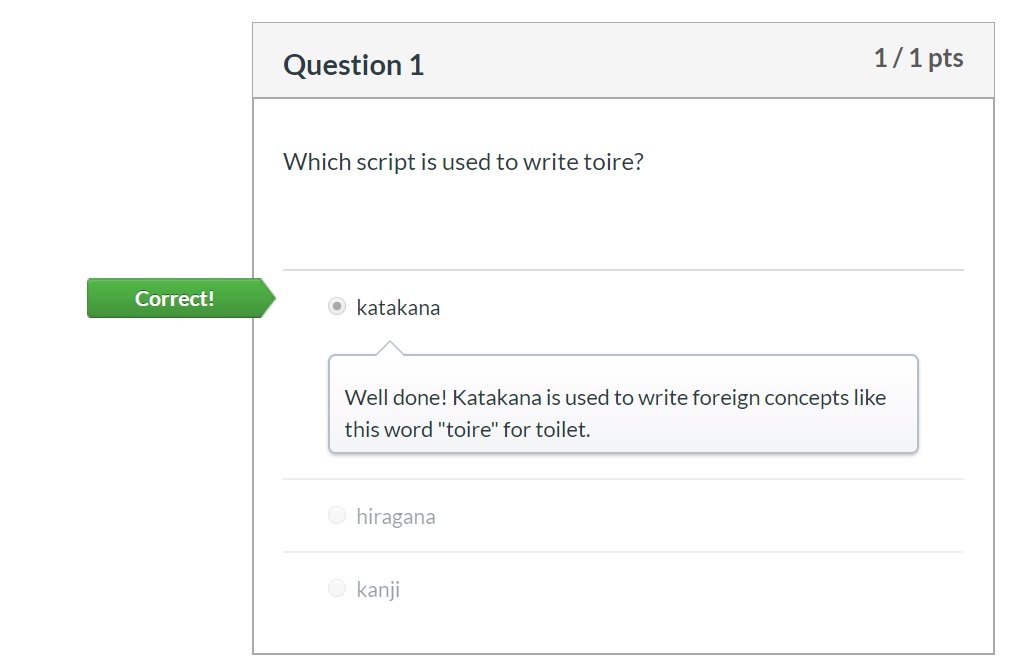
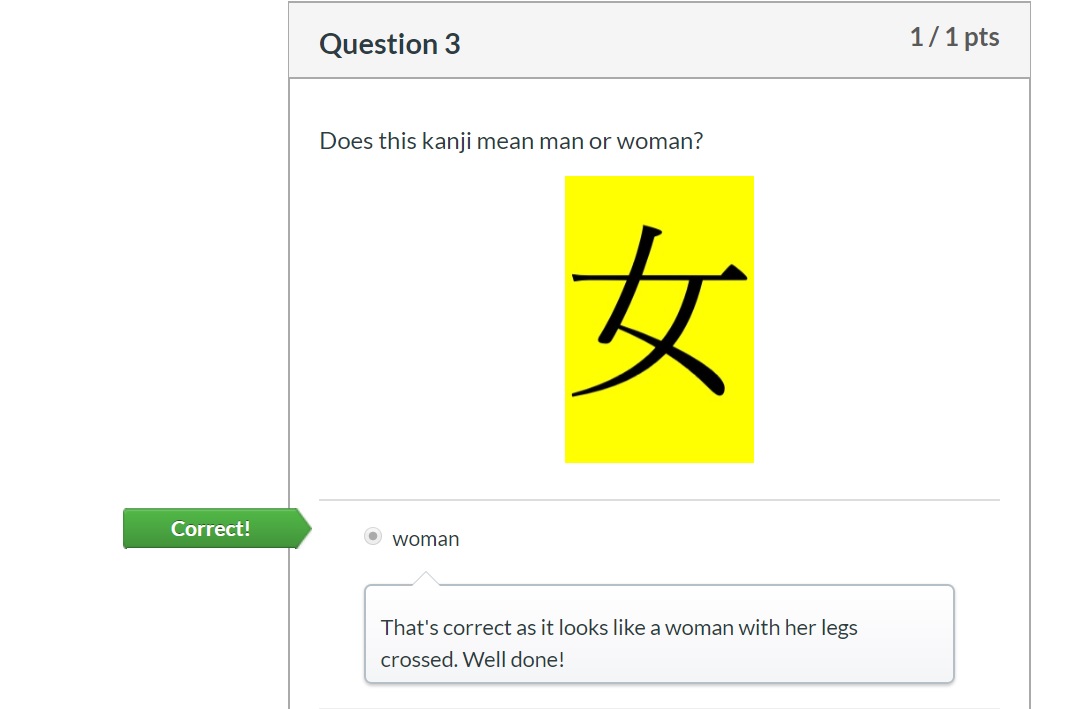
Self-marking online quizzes are a fantastic tool in the contemporary teacher’s armoury. Students can work through the questions at their own pace and the marking is virtually instantaneous. The best platforms allow you to give a comment as well as indicate the correct answer. This is particularly needed for multiple choice questions where the student may have guessed the correct answer. As such, I include a comment even if the student is correct, to ensure they understand why this is the correct choice. Sometimes I will include a brief mnemonic to help them remember it next time.
I have found both of these techniques to be worth the time commitment. I value feedback and recognise the positive impact it can have on my students. I also need to sleep. Aim to analyse the impact of your efforts and make conscious decisions about how you invest your time – for your own sake and your students!

Filed Under: Assessment, Teacher Wellbeing, Teaching and Learning

2020 – The year of the metal rat!

November 26, 2019 by Manten Resources

According to very official sources on the internet, 2020 is going to be “a strong, prosperous, and lucky year” for all signs of the juunishi, and “everyone will show determination regarding their goals, and aspirations”. It is “a great year for founding and evolving”. So, what are you waiting for? Time to get excited about 2020 and sign up for our Noosa workshop. Sadly, there won’t be any fortune telling at the workshop, but we will be sharing future directions in Japanese education including:

  • Hansei habits for teachers and students – how can we help students prepare for success in language learning? How can we prescribe tools for change for individual students?
  • Task based learning – programming learning beyond the linear. What is the place of explicit grammatical instruction in contemporary language courses? How can we keep track of what students are learning?
  • Embedding Aboriginal and Torres Strait Islander perspectives in the primary and secondary context
  • Exploring soft CLIL through cross-curricular activities and play based learning
  • Multimodal texts – what are they? Beyond the metalanguage to classroom application
  • Surviving and thriving in the language teaching space – finding ways to align system goals with your personal values and strengths

The workshop is held Saturday July 11th which falls in the holidays for all the states, so we hope you can slot in a day with us. This year we are focusing on lots of take-away ideas and hands-on activities for primary and secondary teachers of Japanese.

This is the 3rd workshop Junko Nichols and I have run at Noosa and we would like to thank all those enthusiastic participants who keep encouraging us to come back. It is going to be a HUGE day of learning, escaping the winter cold at the beautiful Pepper’s Resort, Noosa. The range of ideas is sure to raise your motivation levels during the mid-winter slump.

Early bird offers apply to the end of Term 1 only and places are strictly limited as this is designed as an intimate workshop.

To book your place, click here or email me at jblog1help@gmail.com to discuss any aspects of the day. We hope to see you there!

Juunishi reference: Retrieved from https://www.thechinesezodiac.org/horoscope-2020/

Filed Under: Aboriginal and Torres Strait Islander perspectives, Professional development, Student Engagement, Teacher Wellbeing, Teaching and Learning

Christmas Countdown!

November 4, 2019 by Manten Resources

Term 4 is well under way and many of us are beginning to plan for next year – or fantasize about the Christmas holidays at least! As you begin to finalise your budgets and plan for the new year don’t forget to buy yourself a little something for Christmas. And what is the one thing all teachers need more of? Time.

Here is a list of 7 great time-saving resources under $70.

  1. Base Camp. This is definitely my new favourite resource and I have been thrilled to see small changes in my students as they learn the secrets of better study habits. $50 for the set.

https://www.mantenresources.com.au/teachers/our-resources/base-camp/

  1. The Platform. This is another new resource that builds on the work with Base Camp to develop student writing skills via a temptation bundle. This can be used as a formative assessment tool or ongoing classwork task. $50

https://www.mantenresources.com.au/teachers/assessment/assessment-inspiration/year-9-10-formative-task-the-platform/

  1. The Year 9/10 Values task. This task provides students with an opportunity to identify their own values, and to explore the profiles and life experience timelines of famous Aboriginal and Torres Strait Islander role models. This can be used as a formal assessment task or as a group task for NAIDOC week celebrations. Many of us want to embed Aboriginal perspectives in a more authentic manner but run out of time or ideas. This one is done for you. $70

https://www.mantenresources.com.au/teachers/assessment/assessment-inspiration/year-9-10-formative-task-the-platform/

  1. The Patch system. These are available for hiragana, katakana, Kanji basic and Kanji extension 1. This system allows students to have more autonomy in their script learning and provides much needed progress indicators as students work through the graded levels. This system is also supported by Education Perfect lists.$50 each

https://www.mantenresources.com.au/teachers/resources-teaching-scripts/

  1. Sample teacher marking guidelines. The biggest time-saving resource we have is the student workbook resources that have detailed tasks, listening drills and google forms with answers. If your budget doesn’t stretch that far though then the sample marking guidelines are a steal. They provide you with the tasks and sample answers giving you loads of inspiration even if you aren’t using our textbook as your main resource. Lessons for when you are away are suddenly done! $50

https://www.mantenresources.com.au/teachers/our-resources/student-workbooks/

  1. Speaking stations. The speaking stations game aims to maximise the time on task by placing the students in the driving seat. At all times both members are active either asking or answering the listed questions. The dice adds an element of luck so even the most talented student could be undone by unlucky dice throws. $50 https://www.mantenresources.com.au/teachers/blog/speaking-stations/
  2. Year 7/8 Japanese investment Expo. Students work through the reflection tasks that have them analyse details from a Japanese text, use hiragana and katakana tables to categorise export products and produce a bilingual video promoting their chosen agricultural industry using simple language and the scaffold provided. An optional extra would be to hold the “Expo” during a visit by Japanese students. $70

https://www.mantenresources.com.au/teachers/blog/making-language-relevant-in-regional-areas/


Good luck everyone with your 2020 preparations.

Filed Under: Aboriginal and Torres Strait Islander perspectives, Assessment, Student Engagement, Teacher Wellbeing, Teaching and Learning

Teacher commitment to lifelong learning

October 2, 2019 by Manten Resources

Recently we launched a new resource called Base Camp. This resource was designed to develop in students the skills they need to learn a language. Base Camp 1 outlines common strategies such as mnemonics and acrostic poems, whilst Base Camp 2 provides suggestions for elective students on how to embed their language learning in their current online leisure activities.

Both of these resources outline how to harness research into the psychology of motivation to help students find time and motivation for their language learning. Methods such as habit stacking, implementation intentions and avoiding the Valley of disappointment provide an infrastructure for successful learning to occur. As I mentioned in my previous post, the very first concepts we should be teaching in our language courses, is the how of learning. The success of all our subsequent lessons will be improved if students have fundamental knowledge of learning habits, study skills and motivation techniques. The poor continuation rates in languages suggest amongst other things, that students are not finding it an easy choice.

As we enter term 4 and elective classes for 2020 are being announced, I am impressed to hear some teachers are organising a special orientation lesson for these language students. During this lesson, sometimes held at lunch, teachers are guiding students through the skills in Base Camp – urged on with some Japanese treats – to have them ready for the start of the year. This seems to be particularly useful if you are teaching the Beginners course for Year 11 and 12. (If you are planning on running such a mini-lesson, you may be interested in our Grammar Patch that is coming out in term 4. This works similar to our Hiragana Patch series but with targeted grammar review. Booklet 1 revises tenses of nouns, verbs and adjectives and Booklet 2 works through common uses of the て form.)

What is also impressive are the teachers who have told me they are using the strategies in Base Camp to drive their own lifelong learning in language. Language teachers are extremely busy and committed people so a few tips on how to find time and motivation can be the difference between thinking about studying as an adult and putting those dreams into action.

The Base Camp level 1 and 2 resource is sold as a set for $50 and can be purchased by emailing jblog1help@gmail.com . The Grammar Patch will be launched in Term 4 and will also be $50 per Book level.

Happy holidays everyone!

Filed Under: Student Engagement, Teacher Wellbeing, Teaching and Learning

Investing in you

July 22, 2019 by Manten Resources

Every time you take a flight you receive some excellent advice on life that most of us not only ignore, we fail to even acknowledge at the time. I am referring to the safety demonstration. The wisdom in the words “secure your own oxygen mask before helping others” is applicable to all aspects of our lives. Yet as we roll into term 3 how many of us have spent the first half of the year helping our students, our staff and the school community often at the expense of our own time, relationships and personal needs.

One area I feel we are particularly poor at is prioritizing our own learning needs. I was fortunate to visit Japan these holidays and I was reminded of how the culture of learning permeates everything in Japanese society. It is not only students studying for exams, but adults taking proficiency tests and courses in everything from foreign language classes to needlework and tai chi. Stationery stores had special diaries to help people use their time more wisely and focus on daily goals. Even I became enthused by their slogan 「大切な一日を無駄にしない」.

So, I did what every Japanese teacher does and stocked up on resources – but this time for me. I purchased study guides for the Japanese Language Proficiency exam at levels suitable for the teachers I work with and me. I realised that the best way to model a growth mindset to my students, is to demonstrate how I continue to prioritize learning in my own life. Year after year, we let our own language proficiency decline as we teach to junior classes. We become used to only using the kanji that is listed on the syllabus. It was so exciting to be immersed in “non-syllabus” kanji again in Japan. It was like eating out with adults after weeks of sharing simple meals designed to suit your toddlers.

I know we are time poor but if you committed to 5 minutes a day 6 days a week you will be spending the same amount of time on Japanese that many of our primary students receive! It doesn’t have to be quality time either – 5 minutes on the commute, in the carpark before you drive home, at breakfast before anyone gets up or in the bath at night. My son loaded a fitness app on my phone recently that has a fabulous robot voice that offers no room to procrastinate. She loudly announces prior to each new set “Do the exercise.” There is no enthusiasm in her voice, she is not trying to convince me this will be fun, she simply wants me to get on with it.

Invest in you this term and start “securing your own oxygen mask before helping others”.

If you need some motivation to get started the JLTAV are running a language maintenance immersion weekend in October https://forms.gle/9mQHZStFNSsCbf1EA and the Japan Foundation run monthly speaking nights and courses specifically for teachers.

Filed Under: Growth mindset, Professional development, Teacher Wellbeing

Mid-year goal check

July 18, 2019 by Manten Resources

We are officially half-way through winter and half-way through the school year. Hopefully we can begin to find some fresh energy as we look towards the warmer days to come. This mid-point is a perfect time to pause and reflect on how your students are progressing. It is likely that some students are merging ahead in their learning of script whilst others may be lagging behind.

I was reminded the other day of how exciting learning to read for the first time can be. I had been showing a male primary student a few hiragana letters and then lined them up to spell basic words like sushi and sashimi. His amazement and excitement to realise that the letters spelt words that they knew was infectious. There is some concern that boys are often less motivated language learners than females, but deeper investigation reveals that this is often tied more to a lack of progress indicators than a lack of interest in the actual content.

Boys complain it is difficult to see the extent they have improved due to a lack of progress indicators (Pavy 2006). Without such indicators of achievement, their motivation wanes.
Pavy, S.(2006) Boys Learning Languages Babel, v41 n1 p4-11, 38

I have found that boys particularly enjoy kanji and find the visual meaning and the challenge appealing. I have watched students embrace their script studies via self-directed systems such as our Patch system. This system is available for hiragana, katakana, and two levels of kanji. It allows students to work ahead at their own pace and provides progress indicators as they pass each of the 15 levels. It can save teachers hours of preparation time and remove that nagging stress each day of needing to extend students on the spot who have finished the work faster than you expected. This systemic program of differentiation extends the students in a meaningful way.

As we approach the midpoint of the year, try to pause and reflect on one aspect of your students’ progress that you would like to improve upon in the coming months. Where possible, use a systematic approach that you can return to again and again.
If script is your goal, then you may be interested in our Patch system.
If improving student confidence in speaking is your focus, then you may like to try our Speaking stations game or develop your own. The speaking stations game aims to develop a growth mindset in your students and increase time on task in speaking skills.
Resources such as these are only $50. If the budget allows, it may be worth purchasing such an item rather than spending a few weeks making it yourself. Use the time instead to maintain your own well-being so that you can continue to inspire your students with your enthusiasm and energy.

All the best for the start of term 3!

Filed Under: Differentiation, Growth mindset, Teacher Wellbeing, Teaching and Learning

  • « Go to Previous Page
  • Page 1
  • Page 2
  • Page 3
  • Page 4
  • Go to Next Page »

Primary Sidebar

Copyright © 2026 · Manten Resources - All Rights Reserved